 British Rowing Cloud Migration
We migrated British Rowing's portfolio of custom applications from hosted virtual servers to Microsoft Azure — containerising the applications, moving to Kubernetes, and adopting managed cloud services to improve security, reduce costs, and enable effortless scaling.
The Brief
Ageing Infrastructure, Modern Demands
British Rowing's suite of custom applications had been running on virtual servers hosted with Pulsant for a number of years. While the applications themselves served the organisation well, the underlying infrastructure was becoming increasingly expensive to maintain, difficult to scale, and reliant on a level of manual upkeep that put ongoing reliability at risk.
The goal was to move everything to Microsoft Azure — not just a like-for-like lift-and-shift, but a genuine modernisation. Applications would be containerised and run on Kubernetes, off-the-shelf services would be replaced with Azure-managed equivalents, and observability would be overhauled using Azure Monitor. The result would be a platform that was more secure, cheaper to run, and ready to scale on demand.
Improve Security
Reduce the security burden by moving to managed services where Microsoft handles patching, updates, and infrastructure hardening.
Reduce Hosting Costs
Consolidate infrastructure costs by moving away from fixed virtual server pricing to flexible, consumption-based cloud billing.
Scale on Demand
Enable applications to scale horizontally as usage grows, without manual intervention or infrastructure lead times.
Our Approach
How We Delivered
Every decision was guided by the same principle — hand as much operational responsibility as possible to Microsoft, so the team can focus on the applications themselves.
Application Containerisation
Each application was refactored and packaged into Docker containers, giving them a consistent, portable runtime environment and eliminating the "works on my machine" class of deployment problems.
Azure Kubernetes Service (AKS)
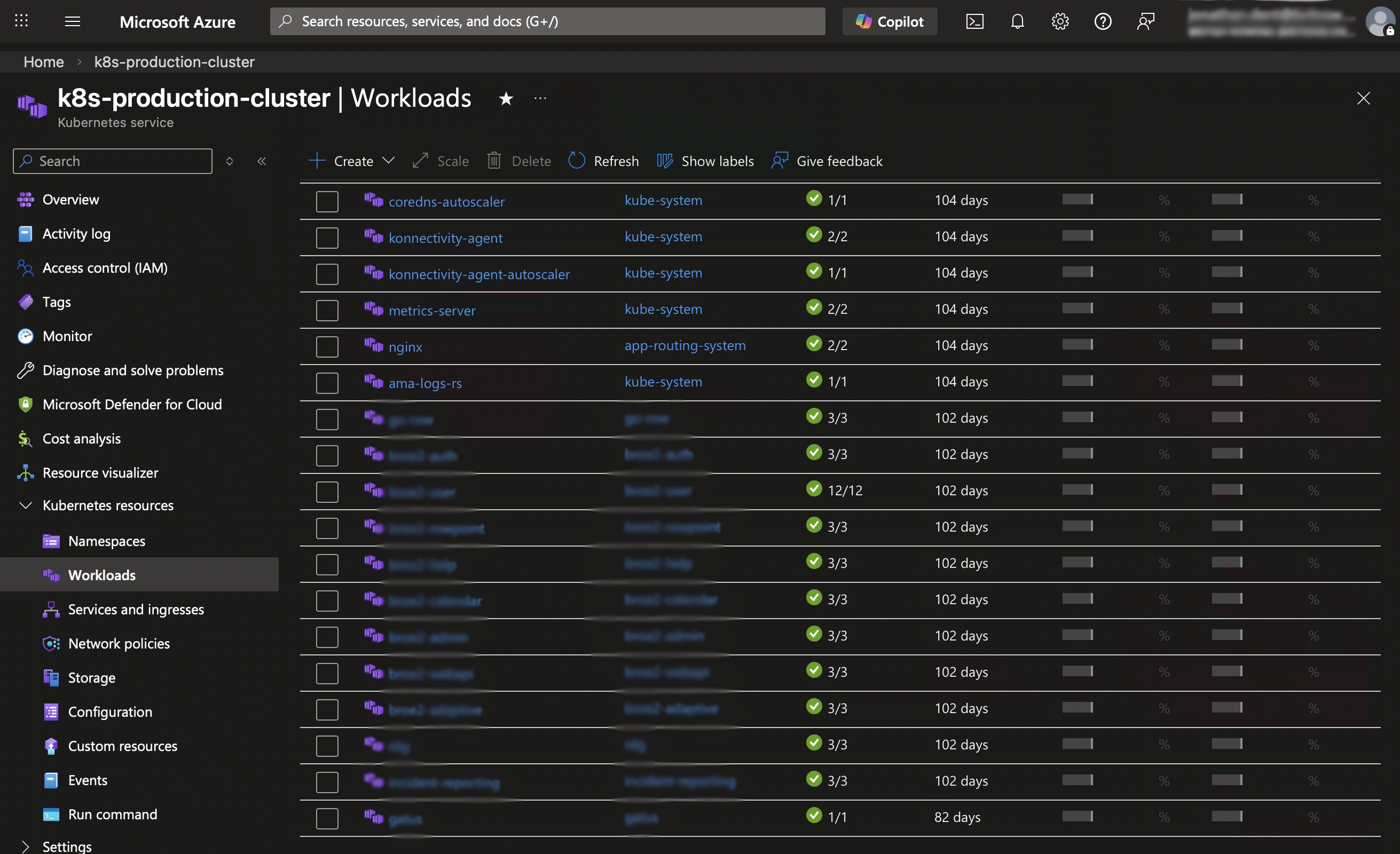
Containers are orchestrated on AKS — Microsoft's managed Kubernetes offering. Node patching, control plane upgrades, and cluster health are all handled by Azure, removing a significant maintenance burden from the team.
Managed Database Services
Microsoft SQL Server, MySQL, and Redis were each migrated to their Azure-managed equivalents — Azure SQL, Azure Database for MySQL, and Azure Cache for Redis — removing the need to manage database servers entirely.
Azure Monitor & Logging
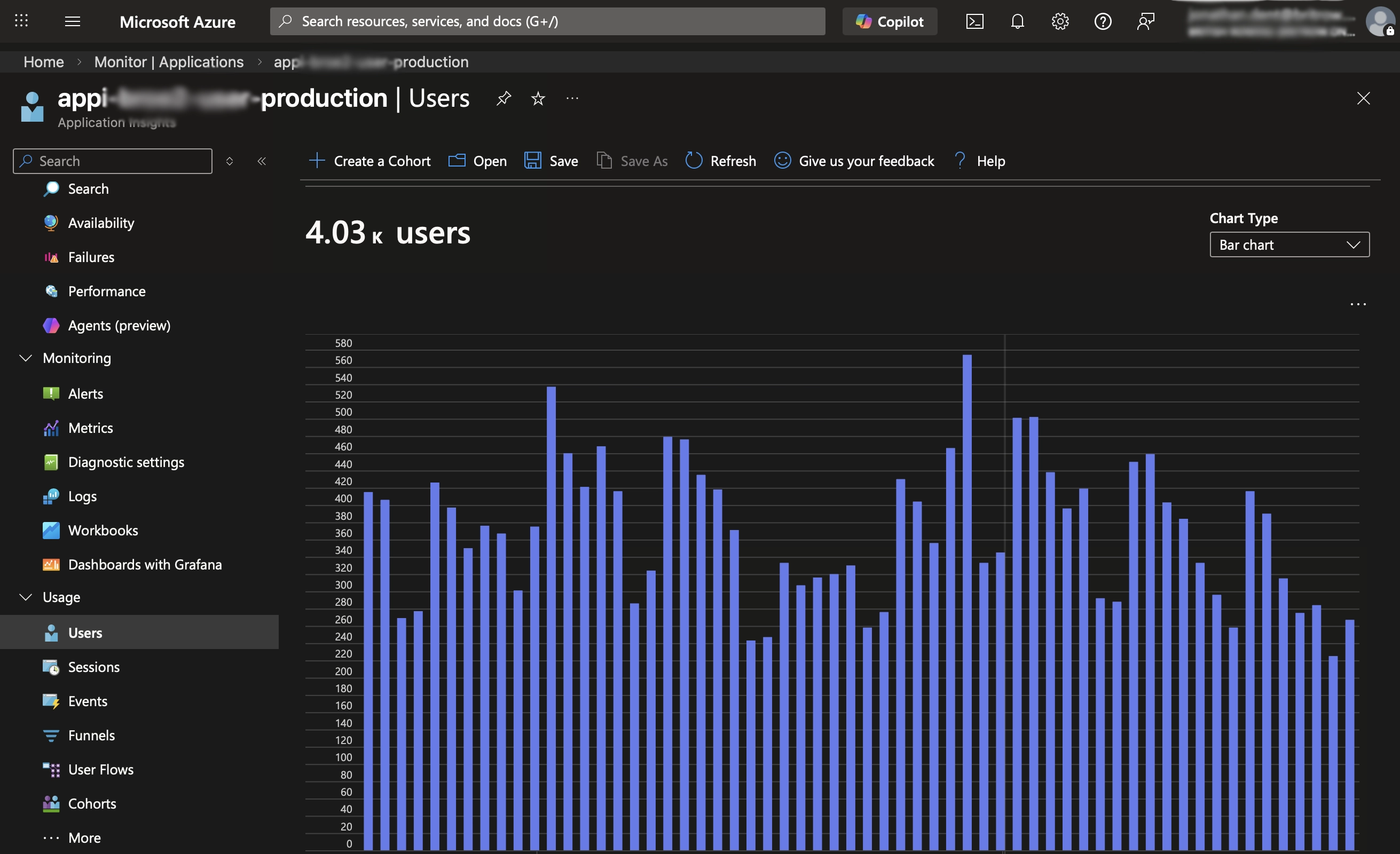
Application logging and monitoring was consolidated into Azure Monitor with Application Insights, providing a unified view of application health, live metrics, and structured log queries across all workloads.
Security & Compliance
By moving to Azure-managed services, the majority of infrastructure security — OS patching, vulnerability management, and compliance controls — is now handled by Microsoft, significantly reducing the attack surface and ongoing maintenance effort.
Carefully Staged Migration
The migration was carefully planned and executed in stages, moving applications one by one with rollback plans in place. This kept disruption to a minimum, with only brief maintenance windows required during the final cutovers.
The Infrastructure
The Platform In Azure
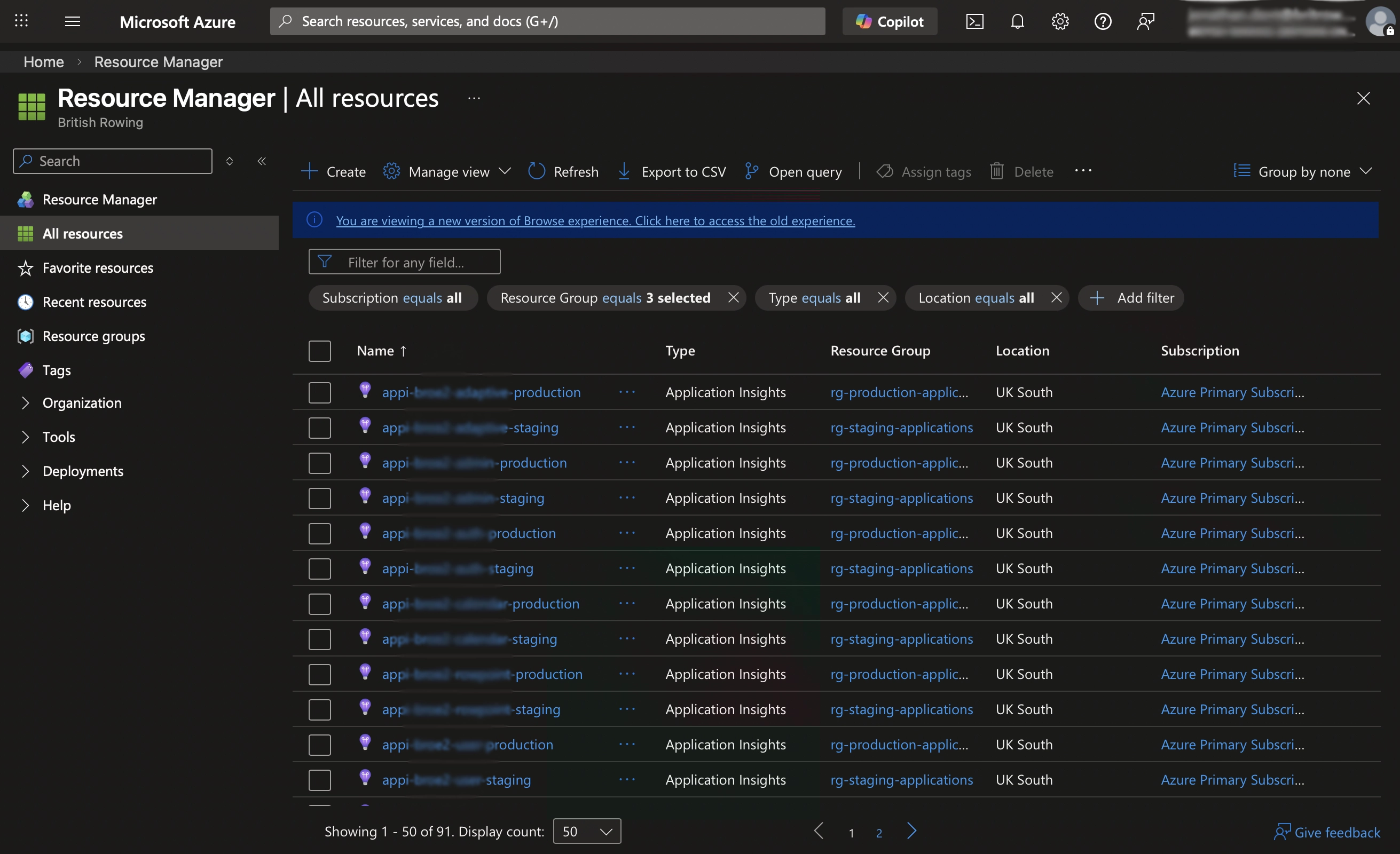
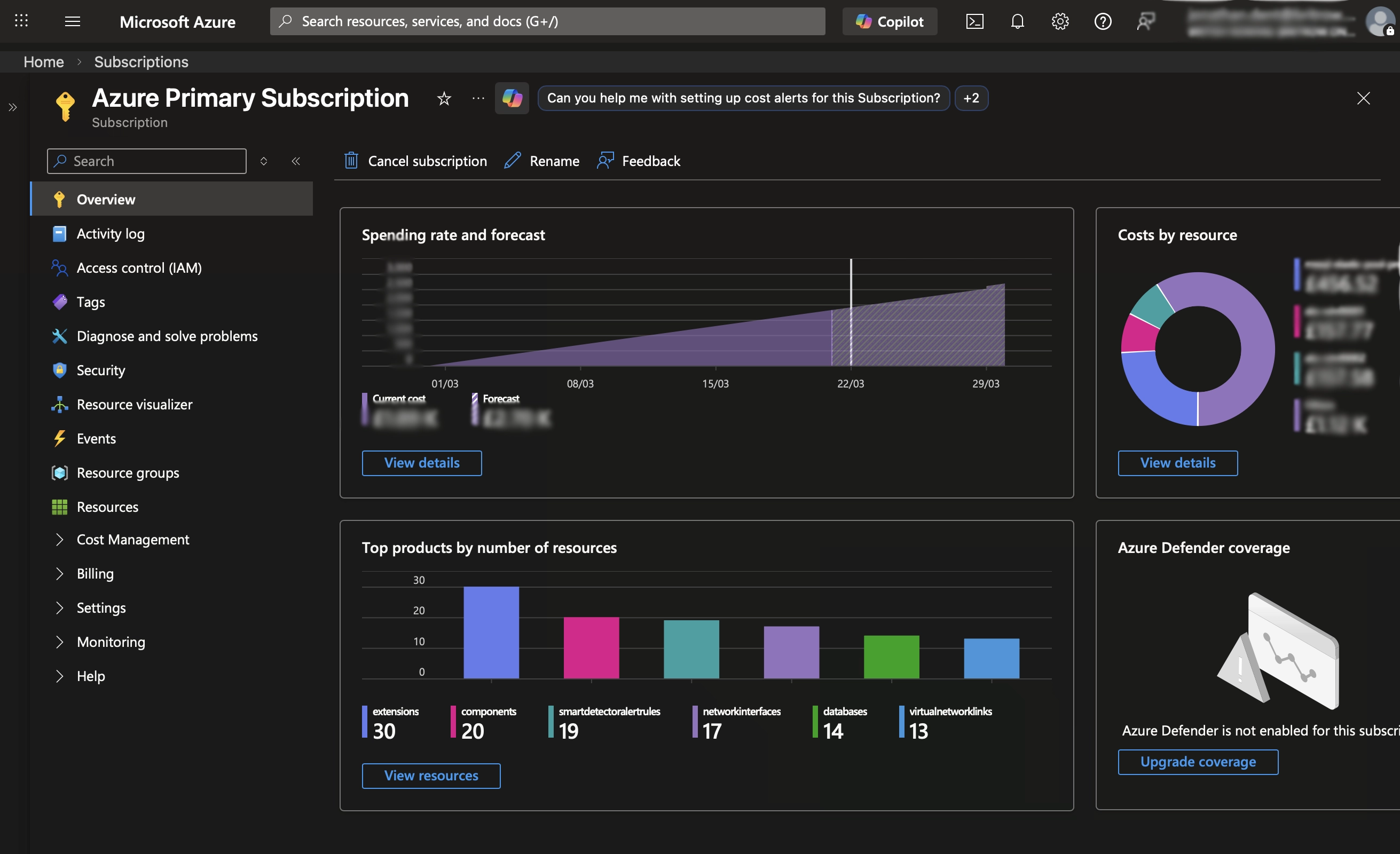
A look at the live Azure environment — all workloads containerised, monitored, and managed in the cloud.
A Leaner, Safer, More Scalable Platform
The result is a modern cloud-native infrastructure where the vast majority of day-to-day maintenance is handled by Microsoft. Applications run in containers on Kubernetes, databases are fully managed, and every service is monitored in one place — leaving the team to focus on building great products rather than keeping the lights on.
Have a Similar Project in Mind?
We'd love to hear about your business and what you're looking to achieve.